
English| EUR
Suggested for you
More currencies
Choose a language
Most anxiety about a Serengeti trip attaches to lions, when the statistics point instead to road hours, dehydration and late arrivals. This page separates the imagined risks from the measurable ones. It explains where the genuine hazards sit on a Northern Circuit itinerary and how timing reduces almost all of them.
Quick answer
Yes — a Serengeti safari is safe when you travel with a licensed operator inside park hours of 06:00–18:00 and remain in the vehicle during game drives. Serious wildlife incidents involving guided visitors are rare. The larger risks are vehicular and medical: long gravel transfers, sun exposure, and malaria. Arriving between 06:00 and 15:00 keeps you clear of driving after dark.
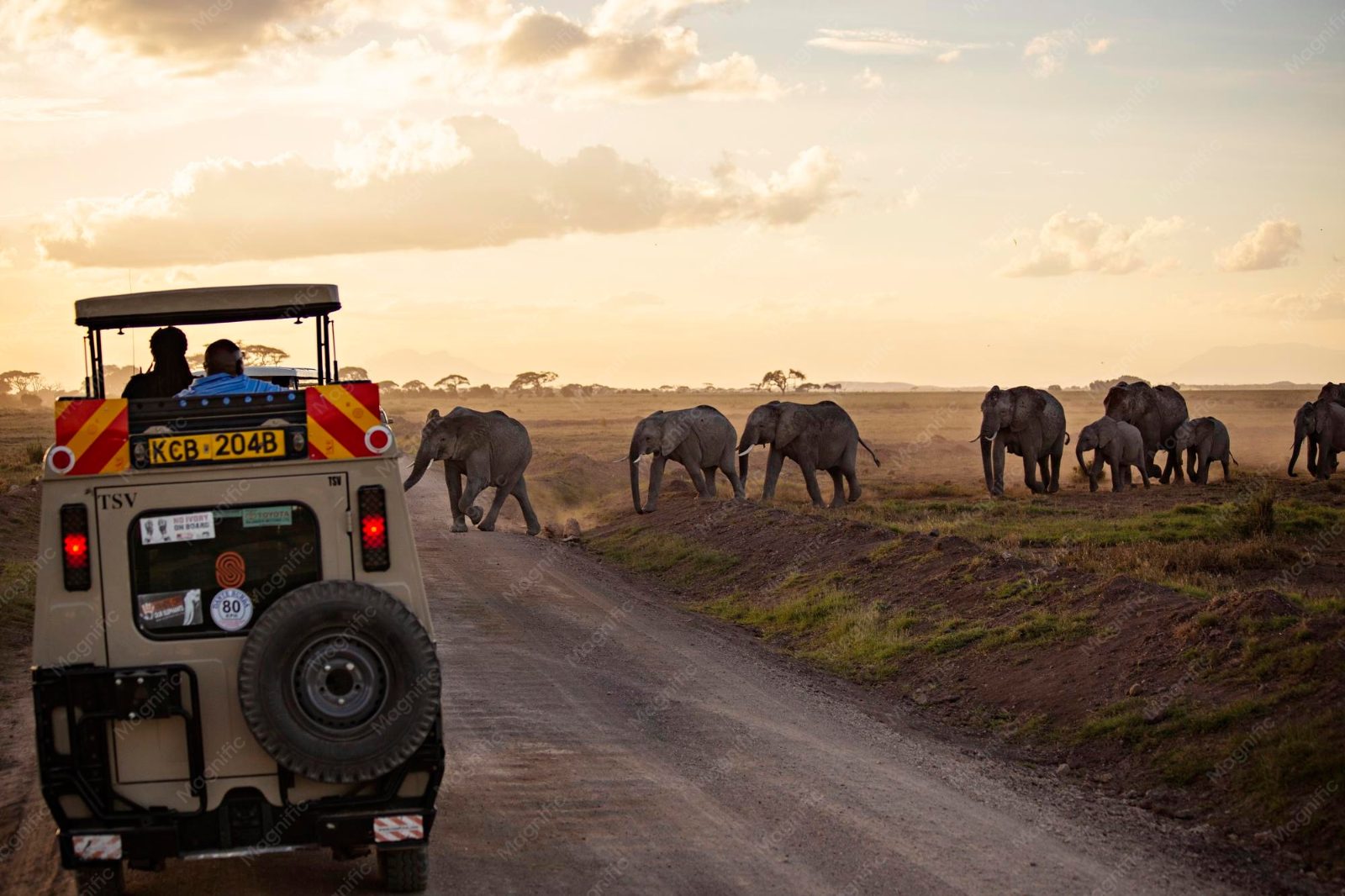
The Serengeti covers roughly 14,750 square kilometres of Northern Tanzania, and yet the overwhelming majority of visitor time is spent inside a metal box with a raised roof hatch. That single detail explains most of the safety record. Predators in the ecosystem read a stationary Land Cruiser as one large, uninteresting object rather than as a collection of separate people, and guides maintain that illusion by keeping engines idling low and voices down at sightings. The question is serengeti safari safe therefore has less to do with lions on the Seronera plains than with the hours spent on the corrugated murram roads between Naabi Hill Gate, the Ndutu area and the Grumeti woodlands. The context that makes the answer legible is the Northern Circuit itself. Most three-day itineraries thread Arusha, the Ngorongoro Conservation Area and the central Serengeti, which means several hundred kilometres of driving, an altitude change of over a thousand metres, and a daylight window bounded by the park's 06:00–18:00 operating pattern. Tanzania National Parks licenses guides, and reputable operators run radio contact, first-aid kits and recovery gear as standard. Yellow fever certificates, antimalarial prophylaxis and comprehensive travel insurance covering evacuation are the practical health layer. Tsetse belts near the western woodlands are an irritation rather than a danger, though dark blue and black clothing attracts them. What to do with this answer is straightforward. Choose an operator registered with the Tanzania Association of Tour Operators, confirm the vehicle has a functioning radio and pop-top roof, and build the day around an early gate arrival rather than a late one — the recommended window runs 06:00 to 15:00, and beating dusk removes the single largest variable. Travellers weighing a Serengeti wildlife tour against other Tanzania safari destinations will find the risk profile broadly similar across the northern parks; what differs is distance. Anyone still asking is serengeti safari safe should measure the itinerary in driving hours rather than in predators, then check that the schedule leaves margin before the park closes.
“Predators read a stationary vehicle as one large, uninteresting object — and guides spend the whole game drive maintaining that illusion.”
The Serengeti functions as a wild ecosystem where safety relies on professional guidance and adherence to established protocols. Understanding how to interact with the environment allows visitors to observe wildlife while minimizing risks.
1.5 million wildebeest migrate annually
4,000 lions inhabit the park
1,000 leopards roam the savanna
0 incidents with vehicles during game drives
24 hours of operational awareness
Most incidents on a Serengeti safari trace back to visitor behaviour inside the park, not to the animals themselves. These are the errors guides correct most often, and the action that prevents each one.
Stepping out of the vehicle for a better photo
Stay seated inside the vehicle at all times unless your guide confirms a designated exit point. Predators and buffalo are frequently concealed in grass within metres of the track.
Standing up through the roof hatch while driving
Sit down whenever the vehicle is moving and only stand when it is stationary and the engine is off. Sudden braking on rutted tracks throws standing passengers against the frame.
Asking the driver to move closer to animals
Accept the distance your guide sets and use a zoom lens instead. Pressuring a driver forward causes animals to charge or abandon a kill or their young.
Leaning out to feed or attract wildlife's attention
Keep hands, arms and food inside the vehicle and never call, whistle or clap at animals. Feeding habituates them and is the main cause of aggressive baboon and monkey encounters at rest stops.
Wandering from camp or picnic sites after dark
Move only with an escort between tent and mess area at night, and carry a torch. Camps are unfenced and animals pass through them regularly.
Treating the vehicle as safe with doors open
Keep doors closed and latched and windows raised when big cats are nearby. An open door breaks the vehicle outline that keeps predators uninterested in the occupants.
Serengeti conduct rules exist because the park is unfenced and animals move freely around vehicles. Park rangers enforce vehicle, noise, and environmental rules directly, and breaches can end a game drive early.
Serengeti National Park is located in Northern Tanzania and is most commonly accessed via road transport from Arusha. Travelers typically follow regional road networks connecting through the Ngorongoro Conservation Area to reach the park gates.
A104 road from Arusha to Naabi Hill Gate
Public transport Arusha to Serengeti (limited access)
Private hire vehicle from Arusha or Kilimanjaro International Airport
The best arrival window is 06:00–15:00. Arriving early maximizes wildlife viewing opportunities and ensures arrival before park closure.
Park access requires mandatory conservation fees established by Tanzania National Parks. Recognizing these standard costs helps visitors identify legitimate operators and avoid unlicensed, unsafe alternatives.
Verdict: A foreign adult pays 83 USD plus 18% VAT, with the total cost determined by the duration of the stay.
Serengeti National Park maintains consistent operating hours throughout the week to ensure visitor safety and resource protection. Park access remains regulated within these established timeframes.
Everything you need to know about is serengeti safari safe
Yes, a trip to the Serengeti is generally considered safe when organized through reputable operators who follow established wildlife protocols. Following professional guidance and park regulations is the most effective way to remain secure while viewing African wildlife.
The security of your trip often depends on the experience of your vehicle driver and adherence to park rules regarding proximity to wild animals. Choosing established companies for your Northern Circuit Safaris provides an extra layer of oversight and reliable equipment.
Most family travelers find that a guided wildlife expedition is safe when they stay inside designated vehicles during game drives. Professional safari providers prioritize the security of all guests by maintaining constant communication and following park safety guidelines.
Guides are trained to read animal behavior and maintain a respectful distance to ensure is serengeti safari safe practices at all times. They manage logistics and monitor the surrounding environment so you can focus on the natural surroundings.
Maintaining security means never leaving your vehicle unless instructed by a guide and keeping noise levels low near animals. These basic precautions contribute to the overall result that is serengeti safari safe for all participants.
High tourism volume during the migration ensures that many vehicles are present, which helps maintain standard safety practices across the park. Regardless of the season, maintaining situational awareness and following your guide is the primary method to keep your experience secure.
For optimal security and to ensure arrival before park closure, the best arrival window is 06:00–15:00. Arriving within this timeframe allows you to navigate to your accommodation during daylight hours.
3 Day Serengeti and Ngorongoro Safari
Read more GuideBest Time for Serengeti Safari
Read more Tickets & tours3-Day Serengeti Safari from Arusha
Read more Tickets & tours3-Day Serengeti Safari from Zanzibar
Read more Guide3-Day Serengeti Safari Price & Cost
Read more Tickets & tours3-Day Serengeti Fly-in Safari
Read more